GRAVASTAR DEVELOPMENT HISTORY
Beginnings
In May of 2015, Derek Blair started Gravastar as a humble Game Design Document. Over the next several months, the characters, story, world, design, and mechanics were outlined, and the GDD quickly ballooned to almost 100 pages. The core ideas were to have a vibrant world to explore and a character-driven narrative, with a fast-paced Battle Engine inspired by 2D arcade fighting games. The Battle Engine incorporated real-time input combat mechanics, where players would perform Normals and Specials, within an Attack Time window based on the character’s Stamina stat.
Now, you might be saying to yourself, “2015…? That was over 10 years ago! Why isn’t this game done?”
We’ll get to that.
The first iteration of the game was done with Traditional 2D animation. Aesthetically, the goal was to be a love letter to Capcom. Environments and Overworld characters in the style of Breath of Fire 4, and a Battle Engine with the animation quality and energy of Marvel Vs. Capcom 2.
A very small team was put together, and work on the Battle Engine began.
Our first playable version of the Battle Engine was rough, but the ideas and gameplay were there. In 2016, We brought this demo to iFest, an independent games show in Seattle. As rough as it was, the demo was well-received, and much to our surprise, the demo won the iFest People’s Choice Award.
We continued to work on the Battle Engine, implementing more systems and mechanics. It quickly became apparent that the largest hurdle of a game this ambitious was going to have, would be in the Art Direction.
The Dream of 2D
Animation, especially hand-drawn animation, is incredibly time-consuming. Making a JRPG essentially means committing to creating 2 completely different games at the same time: a world to run around and interact with, characters and NPCs to experience that world through, and a Battle Engine, which is where the player will be spending the most time.
This meant we had 2 entirely different sets of art assets needed for our characters and monsters; an Overworld version, and a Battle version. But we decided to go for it. Spoiler alert: this would not be sustainable.
But just for fun, let’s go through the 2D animation process for a single character attack. We’ll use Silex’s Slice attack as an example.
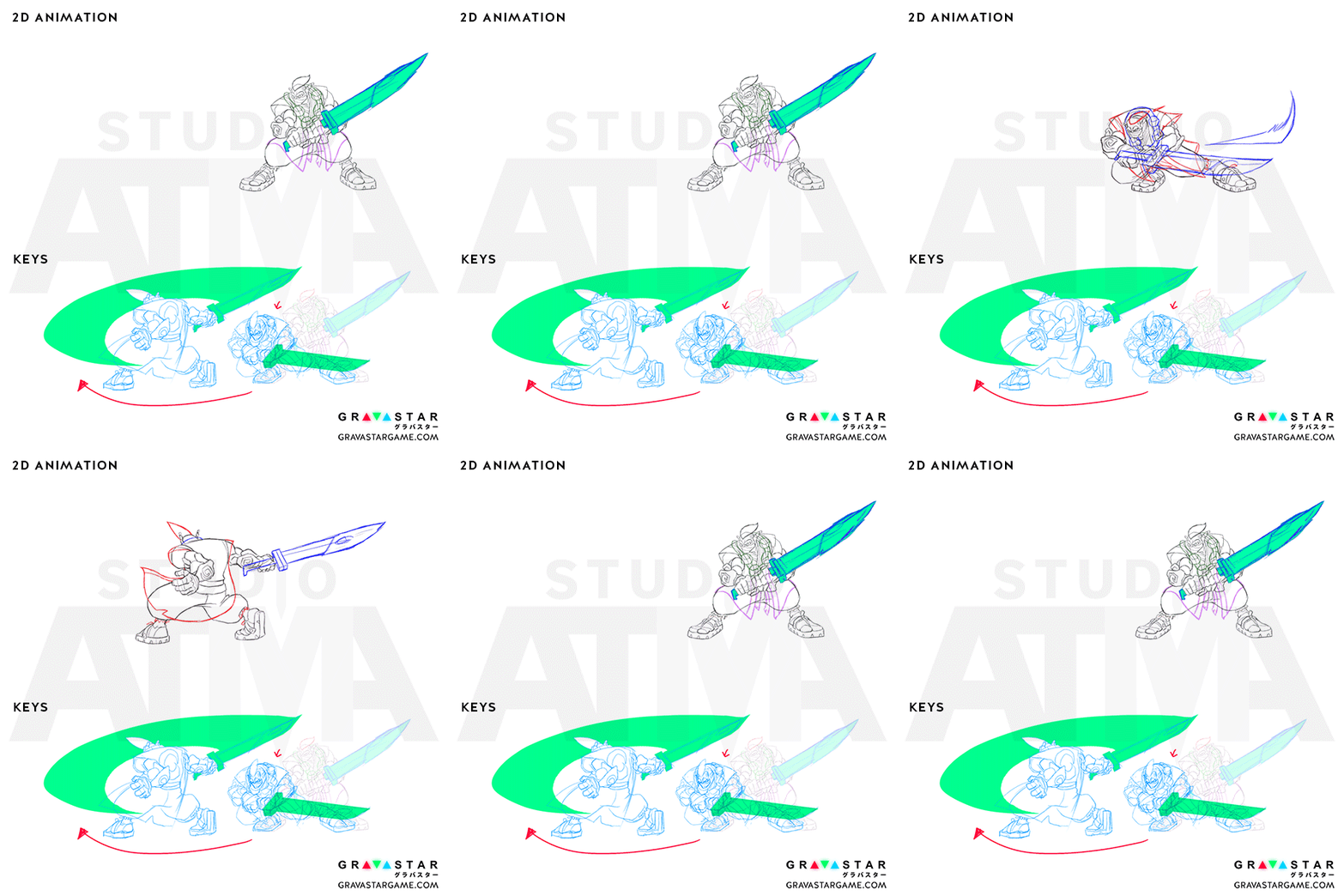
Typically, 2D animation starts with keyframes. These are the core poses needed to convey the action. For Silex’s Slice, he will start and end in his Attack Idle pose. He needed an anticipation frame where he crouches down, and a main action frame, where he explodes out of that crouch to deliver the deadly slice.
From there, the keys are ‘in-betweened’, where additional frames are added or removed, and timing is adjusted. Secondary animation, like his weapon, coat, necklace, sandal tassels, and hair, are drawn in a different color for clarity.
The pencil test is then given a white matte, each frame is exported into a sprite atlas, and the animation is tested in-game.
More revisions are made to timing, and when we are happy with how it feels, the animation moves to ink and paint.
In this stage, each frame of animation is outlined by hand, flatted with defined colors, then shaded. Because drawing weapons consistently in perspective is difficult, we did them in 3D, and they were composited in to the final frames.
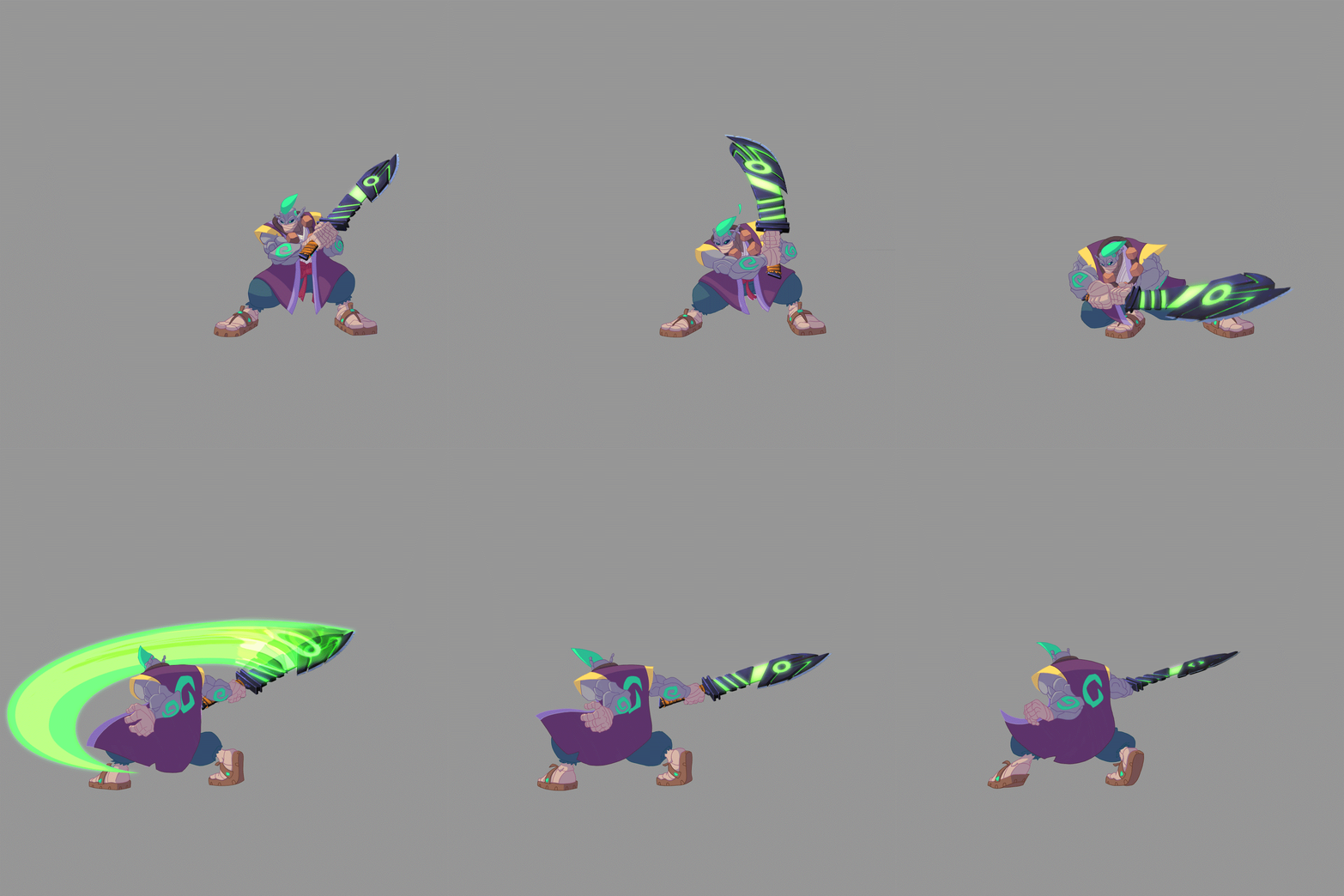
Looks cool, right?
You know what’s not cool? Needing to do entire move sets, including all of the other little Battle animations (Use Item, Get Hit, KO, etc), for a minimum of 3 characters, with a barebones team and no budget. And this is all before the Overworld animation.
Now let’s look at an example of those!
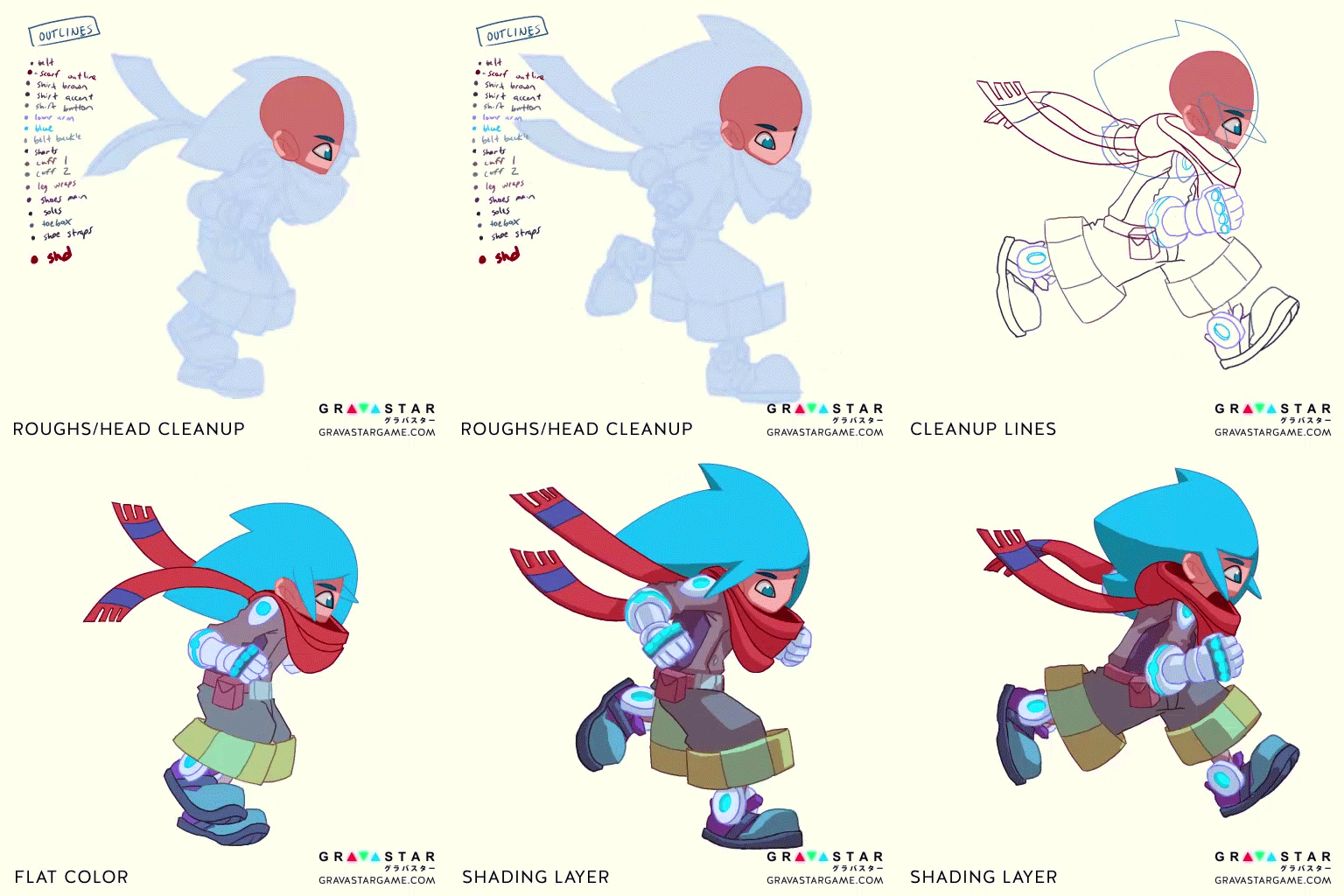
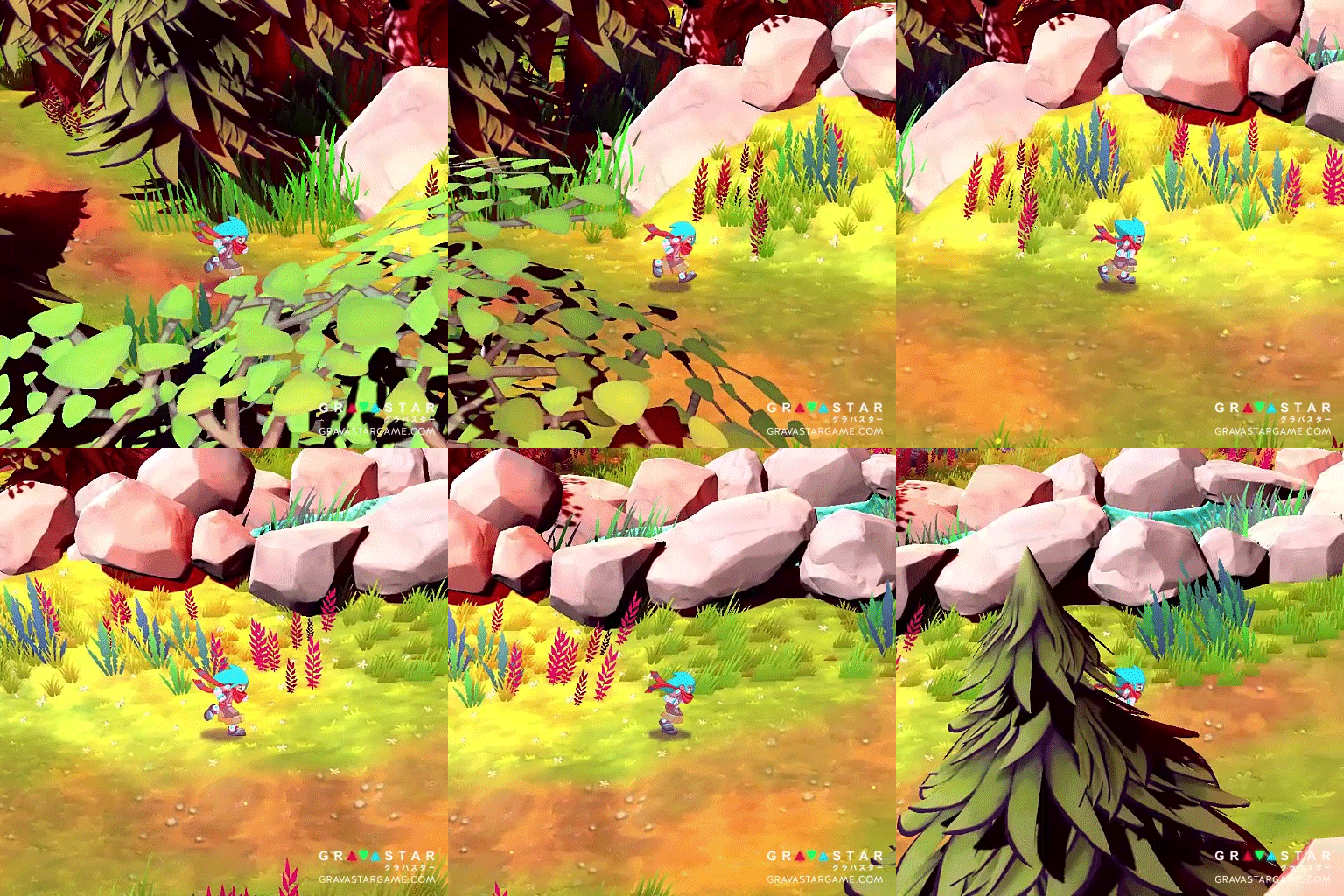
Each Overworld character needs to be able to Idle, Walk, Run, Dash, etc.
This is Baird’s 8-frame side-view run animation. Since we’re not doing a Platformer, we are going to need animation of this run, in 8 directions.
8 frames of animation x 8 directions = 64 frames of animation
And that is just to get him running around. Factor in all of the other animations needed, multiply that by all your characters, Overworld monsters, NPCs…
You see the problem.
After 2 years of working on the game in our spare time, here is where we ended up.
You will notice there are only 2 battle characters, a lot of unfinished animation, no other Party members following Baird in the Overworld, and above all, the absolutely insane amount of work remaining just to get a vertical slice done.
We brought this demo to The MIX in 2018, an Indie Game show that happens during the weekend of PAX West in downtown Seattle. Again, it was received well, yet it still lacked the depth of gameplay, the immersion, and the polish we were striving for.
But we were tired, and burnout was rearing it’s ugly head.
We decided to go on a Team Retreat for a weekend. We went out to a nice cabin in the woods, we ate good food, we played tabletop games. But most of all, we talked. We talked about scope. We talked about time. We talked about our current ability and skills as developers to even make this whole thing. We talked about the fact that even if we did find a publisher who was interested, the astronomical cost of developing a JRPG, entirely with 2D animation in the way we envisioned, as a scrappy team of dreamers with no games released…
In no way, shape, or form was it realistic.
We needed to put Gravastar on pause. If we were really, truly going to make Gravastar, we would have to gain XP and Level Up. We made a comprehensive list of everything we needed to tackle and learn to truly make it how we wanted. Production pipelines, narrative systems, quest systems, gameplay systems, UI systems, battle mechanics.
We would take what we had already built, and make a smaller game with it. A single character with a story to tell, set within the world and mechanics of Gravastar. A little prequel starring the affable old man you help in the Gravastar demo we took to The MIX: Erwin Branford.
Erwin’s Retreat
Erwin’s Retreat is about Erwin Branford, a retired Astrobotanist for the Teknos Corporation who recently lost the love of his life Emma to a mysterious illness. Stricken by grief, he sells their flat in the busy metropolis of Corince, and retreats to a cottage in remote Peregrine Wood, where Emma grew up, which he inherited. Strange things begin happening upon his discovery of a dusty old lantern tucked away in a box of Emma’s things.
Erwin’s Retreat is an Action RPG, where you use Emma’s Lantern to fire different types of elemental ammunition to solve puzzles and fight monsters, along with your trusty hiking stick. As Erwin unlocks the mysteries of Emma’s illness and Peregrine Wood, he is granted a new elemental ammo type after defeating the Corrupted Deities at the end of each level. When he receives this new ammo, the designs on his robe magically change to reflect the new skills he has learned and the visual progress the player has made.
Erwin’s Retreat was our vessel to learn everything we would need to eventually come back to Gravastar, but we didn’t finish the game or release our demo publicly. We showed the game at Seattle Indies Expo in 2022.
After a few years working on Erwin’s Retreat, we felt the project had served its purpose. The project had established our level design and production pipelines, narrative and quest systems, UI systems, exploration and puzzle mechanics, and the ideal workflow for us as a team.
Here is some gameplay footage of Erwin’s Retreat, though it does not contain the next area of this level, or the boss battle at the end.
One of the biggest changes we made with this project was a switch to fully 3D characters, monsters, and animation. In the height of the Covid pandemic, we had plenty of indoors-time on our hands to establish our 3D production pipeline, and our process to create a cel-shaded look and animation style based in limited, traditional 2D keyframe animation.
Once we were satisfied with the look and feel, we were confident that we could bring these techniques to Gravastar, and retain the 2D style and animation we started with.
It was time to come back to Gravastar.
Gravastar Reborn
Because we set Erwin’s Retreat in the same world as Gravastar, we once again took what we had already made for Erwin’s Retreat, and adapted it for Gravastar.
Erwin is still the first NPC you help, and his story from Erwin’s Retreat is still the story behind his quest, yet you experience it through the characters in Gravastar, who come to his aid on their first mission as Spectres.
With our new pipelines, we had a lot of work to do. Our Engineer migrated the old Battle Engine in, and completely overhauled it. Our Narrative Designer started setting up our dialogue and quest system, and got to writing.
The switch to 3D also meant that our Gravastar characters would need to be modeled, textured, rigged, and all of their animation would have to be redone. However, the switch to 3D was one of the best decisions we ever made. Within 6 months, all of the animation we intended for the 2D demo was done, and the 2D animation we had done before served as the exact templates for our 3D animations. All we had to do was animate them the exact same way.
Let’s look at Silex’s Slice animation again, after our switch to 3D.
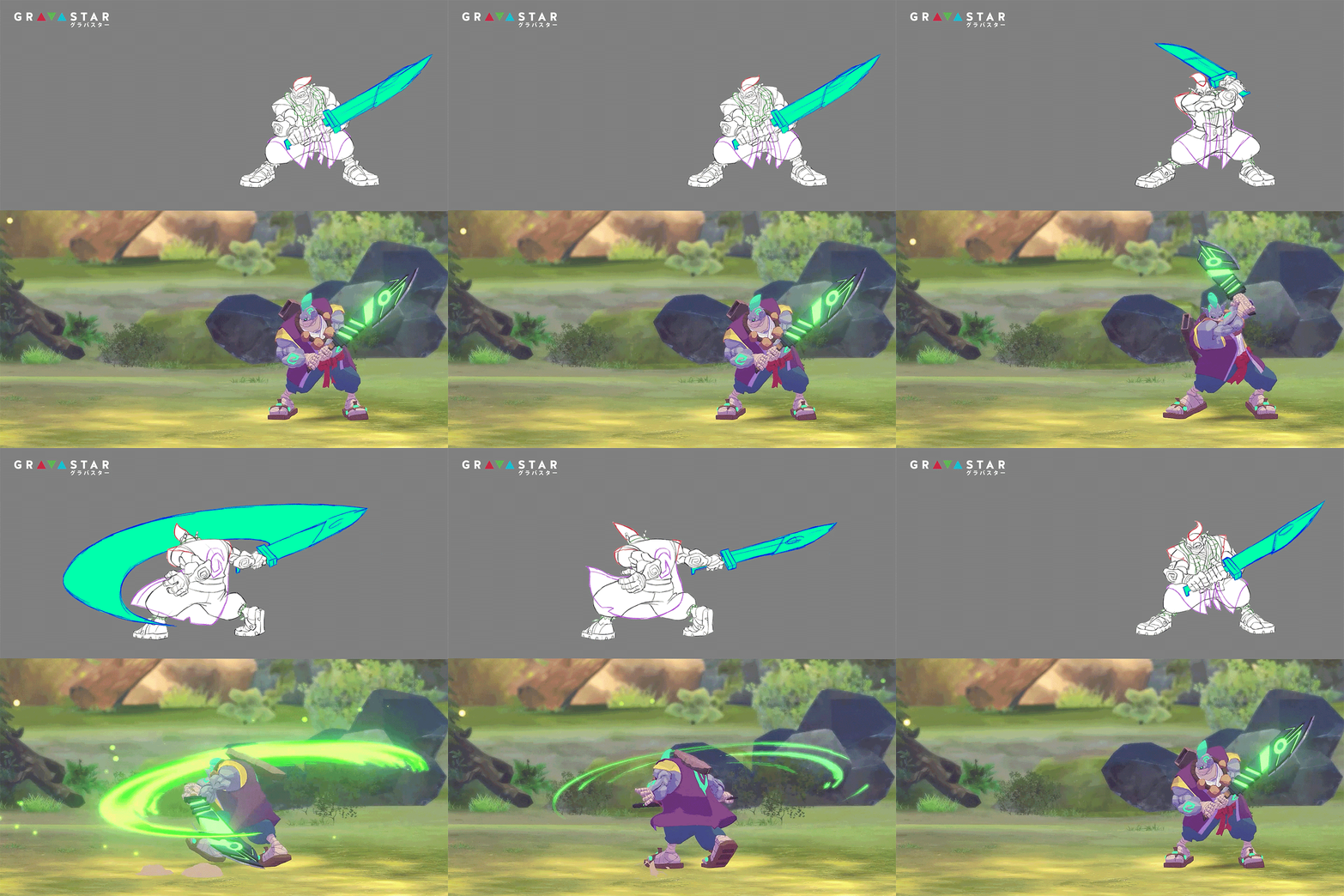
Pretty cool, right?!
As far as animation production time, it broke down like this:
The 2D version of Silex’s Slice attack, with our barebones team and virtually zero budget, took a month to complete.
The 3D version of Silex’s Slice attack, with our barebones team and virtually zero budget, after his 3D model was all set up, took 8 hours to complete.
That’s a 95.5% decrease in time!
Let’s look at Baird’s 3D Overworld Movement Cycle.
His Idle, Walk, and Run only had to be animated once, and took 8 hours total.
And yes. We had to sacrifice some of that 2D charm of animating each frame by hand, but the trade-off is that we actually get to realize our dream game, as we envision it, in a timely manner, with all of the benefits that a fully-3d pipeline offers.
Once we finished our pre-production work for our return to Gravastar, every single aspect of production that hindered us before no longer held us back, and we have been flying ever since.
THE FUTURE OF GRAVASTAR
Is bright.